My first published essay, originally appearing in Entropy Mag in 2018.
In the basement of my grandparents’ rural Ohio home, back when it was still their home, a dall ram was mounted on the wall opposite the couch in the basement living room.
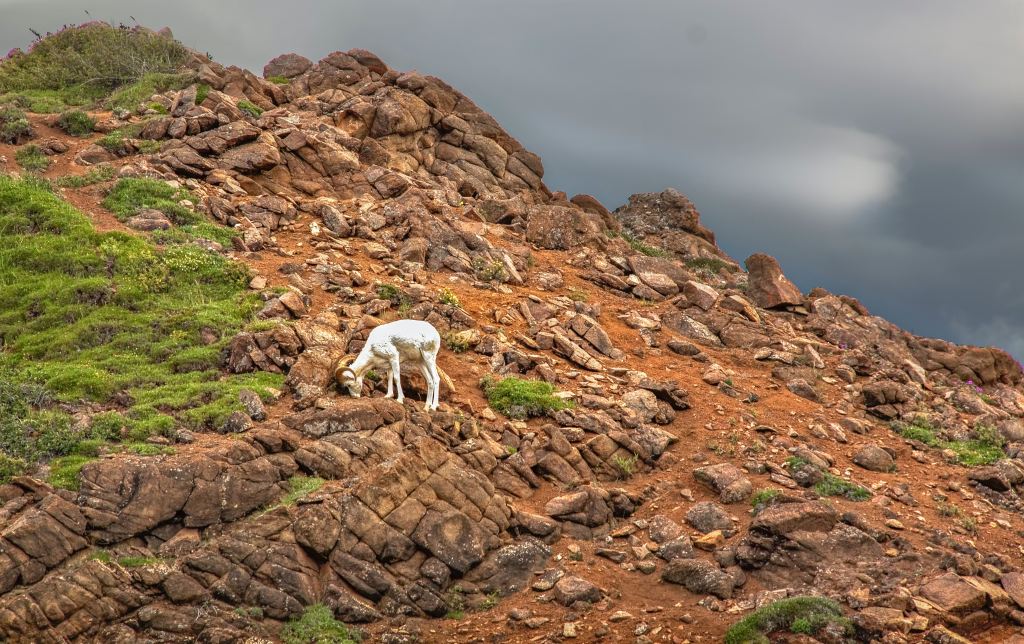
Dall sheep only live in the northwestern portions of Canada and in Alaska.
For most hunters, a dall sheep hunt is a far-flung dream, something to be hoped about in the abstract only.
My grandfather killed the dall ram on the wall in 1976, on the last of his many hunting trips west or north. He died in 2016.
–
The day I turned nineteen years old, I found out that my grandfather was in the local hospice house. By the time I was informed, eight hours away in Chicago, he had already been there for a couple of days.
I remember feeling very afraid and very alone, somehow alone in a city of nearly three million. I remember speaking to my two best friends at the time, Mitch and Aleena, for hours on the phone after I found out. I remember being unable to go to class or eat or sleep or function as a human being and spending all of my time simply counting down the hours till my flight home.
–
His name was William Wayne Miller, which, in the part of the country we are from, is almost like being named John Doe.
He was dying from a prescribed cocktail of prescription drugs, advanced Alzheimer’s disease, leukemia, and lymphoma.
From where he was in that hospice bed, it was hard to believe that he was a man who had once climbed mountains and jumped out of airplanes.
I coped by reading about a dall sheep hunt that Steven Rinella, my favorite outdoors writer, went on. I figured that I could learn all I could about sheep hunting in an effort to recreate him at his height, and not where he was now.
–
Dall sheep are well known for the rugged, mountainous terrain they inhabit. They can scale near vertical walls and have been known to push wolves off cliffs if they try to attack them.
–
I remember that I was wearing a Patagonia Snap-T, dark blue jeans, and L.L. Bean boots at the hospice house. I remember that I was sweating heavily the whole time. I remember that, when a nurse was checking his vitals, he woke up and told the nurse that he had “no idea who that man [i.e. me] was.”.
–
Dall sheep can weigh up to 250 lbs. In the summer, prior to the mating season, dall sheep establish a social order by butting heads. Their skulls can withstand blows 40 times more powerful than what the human skull can survive. Younger, upstart sheep will hook their horns with the older, more dominant sheep and pull them up off the ground to fight. The sounds these sparring sessions make are often mistaken for gunshots. These sparring sessions occur only to establish dominance within the groups of rams and ewes, and are not connected to mating.
The dominant male dall sheep is often referred to as a mountain monarch.
–
The main thing that I have learned about hunting dall sheep from my reading is that you cannot fake it. Humans aren’t designed to live where dall sheep live. The air is too thin for our lungs. The terrain destroys our feet even with the most advanced mountaineering boots available. The only water comes in the form of ice and snow, and there is no shelter available for us unless we bring it up the mountain. Rinella describes dall sheep as living in a place “that would just as happily kill you as let you walk on it.”. Jack O’Connor, the famed OutdoorLife columnist and renowned sheep hunter, said that “Sheep hunters are romantics who love high places and solitude. To them the wild ram embodies the mystery and magic of the mountains, the rocky canyons, the snowy peaks, the fragrant alpine meadows, the gray slide rock, the icy dancing rills fed by snowbank and glacier, the sweet, clean air of the high places, and the sense of being alone on the top of the world with the eagles, the marmots, and the wild sheep themselves…The sheep hunter is willing to climb until his lungs are bursting, to walk until his legs are dead weary, to grow hungry and thirsty for great rewards. There is no half way.”. Teddy Roosevelt, our 26th President and a renowned hunter in his own right, said that “Still-hunting the bighorn is always a toilsome and laborious task…No other kind of hunting does as much to bring out the good qualities, both moral and physical, of the sportsmen who follow it. If a man keeps at it, it is bound to make him both hardy and resolute; to strengthen his muscles and fill out his lungs.”
–
The Sunday of my weekend home from Chicago, my grandfather was brought back to his home via ambulance. His impending death seemed to be dragging everyone who had contact with him down.
My jovial grandmother didn’t sleep, she barely smiled or laughed, and what hair she had left had turned snow-white and died atop her head. I tried to alleviate some of her stress, but what stress I absorbed turned my eyes hollow and sunken, grew my hair longer than it had ever been and covered my face in black patches of scruffy facial hair; I didn’t have the self-esteem to shave. I weighed about 160 pounds, down in a year from the 200 I had weighed when I graduated from high school. My moods swung wildly and for no logical reason. I would sleep for 18 hours one day and then be up for the next 36. I would eat only raw vegetables one day and only ice cream the next. I would go on long runs or hikes wearing a hoodie and tights, trying to sweat out my suffering. I would spend hours writing and listening to the same songs on repeat, trying to bleed my mental instability into fiction that I knew, deep down, wouldn’t pan out.
–
Dall sheep are snow white, with yellow, curving horns made out of the same stuff as our fingernails. You can find them in these magical lands called Alaska, the Yukon, Alberta, and the Northwest Territories, places far, far away from a house in Dundee, Ohio, a house where everybody was dying.
–
I dropped out of college to help my grandmother care for him.
I now recognize this move to be both selfless and selfish.
I moved what little life I had at that point from a Chicago dorm room to a town so small the US Census doesn’t recognize it as anything more than a “Census Designated Place”.
My books were stacked alone on a card table; my clothes lay inside myriad laundry baskets.
My grandmother seemed grateful, if only because she now had someone to talk to.
People around Dundee told me, with typical Midwestern understatement, that I “was doing a good thing.”
If I was doing such a good thing, why was it killing me? Why was I manic one day and too depressed to move the next? Why couldn’t my hands stop shaking? Why did I flinch every time somebody got close to touching me? Why couldn’t I sleep, but at the same time, why couldn’t I drag myself off the living room couch I slept on, out from underneath the gaze of the amber marbles that stood in for the mounted dall ram’s eyes?
–
A dall ram does not generally die a slow death. If they are not killed by falling, avalanches, rockslides, or predators, they wear themselves out during the mating season so that harsh winter kills them off fairly easily right after they reach the height of their prowess.
–
I longed for just a glimpse of the blue that I remembered in my grandfather’s eyes as he died. I longed for how they shone, how they seemed to encapsulate in themselves the very sense of adventure we felt alone in the woods with jackknives and matches in our pockets, with L.L Bean boots on our feet, stuffing our bellies and stickying up our hands and faces with the wild blackberries that grew in droves, that seemed to line every trail up and down the wooded hills where we roamed as boys in heart and mind, if not in body.
–
All dall sheep, including ewes and juveniles, don’t make it through the winter well. The food they can find at the altitude they live at has so little nutrient density that they have to lick rocks in order to get minerals like calcium that they cannot find in the frozen grasses and lichen they generally eat during the winter.
–
As my grandmother bustled around the kitchen, I heard her say: This is what you do for the people you love. I sat at the table, my grandfather was asleep. I tried to write, but couldn’t manage the words.
–
This what you do for the people you love. You let them kill you. You change their diapers and mash up their food and drip Haldol into their mouth and plan for the funeral and clean the dishes and wash their pajamas and carry them from room to room, from their chair to their bed to the toilet, from where you knew them to where you don’t, from where they knew you to where they’ve forgotten you.
–
I wanted to read again. I wanted so desperately for an author to fall from the sky and make my heart beat again, the way Bradbury had when I was 13, the way Kerouac had when I was 16. But nothing came. In the end words on a page had nothing left for me.
I wanted to be able to stop reading about Dall sheep. I wanted to stop digging through the glossy, flimsy pages of hunting magazines for articles about them. I wanted to stop looking at Alaska fish and game’s website and the websites of various outfitters. I wanted to stop watching YouTube videos of sheep hunts. But I couldn’t. I couldn’t even if I had been able too.
–
The morning my grandfather killed his Dall ram he would have woken up before dawn. I do not know what he would have eaten, or if he even would have eaten, ready as we would have had to be to possibly hike up to 14,000 feet above sea level. He would have carried a favorite hunting rifle of his: a 1903A4 Springfield bolt action military rifle that fired .30-06 rounds. This action was fitted with a custom-built stock and a scope designed long range shooting. He would have worn a pair of binoculars around his neck. I know from a picture that we have of him that he was wearing khaki-colored mountaineering pants, a brown Stetson hat, and a brown and red plaid shirt. There would have been a fixed-blade knife on his belt, and he would have carried a slipjoint knife, nail clippers, a red handkerchief, a rubber change purse, chapstick, and his wallet in his pockets.
That’s what he always carried in his pockets. We buried him with that in his pockets.
–
The last time my grandfather woke up before dawn, he attempted to go to the bathroom by himself. This resulted in my waking up to my grandmother screaming my name, my blood freezing at the sound. I ran to the bathroom to find him on the floor, diaper and pajama bottoms around his ankles, bleeding from a scrape on his head.
He had forgotten that he was far too weak to walk on his own, and in a last-ditch effort of self-reliance, had tried anyways.
My grandmother was pulling at his arms, sobbing and saying, over and over: “I can’t get him to stand up.”
–
The day my grandfather killed his ram he would have stood on a rocky peak, rifle across his back and his binoculars to his eyes, searching.
The day he died, he shit his pants.
–
Our patriarch had become a baby that required our round the clock care; the greatest man I have ever known was reduced to wearing diapers and being spoon-fed applesauce and mashed potatoes.
I cannot even begin to describe the pain of wiping the ass of the man who taught you how to squeeze the trigger of a rifle with a seemingly ancient Daisy BB gun, who taught you how to flick your wrist to get an accurate cast from a spinning rod tipped with a crankbait, who taught you how to shake hands and look a man in the eye, the man who taught you to shave and reminded you to shine your church shoes, the man who taught you to pray, the man whose baritone seemed to fill and echo around that old white church during the meditation hymn, the man who taught you where to find morel mushrooms and how to follow deer tracks while keeping the heavy November wind against your cheeks and the sun at your back.
–
There is peace that I cannot find anywhere else in snowy woods that are quiet at the same time they are loud. There is grace in the millennia-old traditions of stooping low to study a track in mud that is indescribable. There is a warmth to the sun that I feel while hunting that I have not felt while doing anything else. The filmmaker Donnie Vincent calls it an “ancestral urge”, and he follows that up by saying that some feel it much stronger than others.
I know how strongly I feel pulled to wild places, back to the Earth from where I came. I know my grandfather felt this way, and that he instilled this feeling in more young men than just me. He had no biological sons of his own, but I shook the weathered hands of several men at his calling hours that told me that they owed him more than they could say; that he was, in Midwestern fashion, “A good man”. I know that he taught better men than me how to use a badger hair brush to whip up a lather; how he taught several young men to discover the unique topography of your face with the gentle strokes of a safety razor. I have no idea how many people he taught to look for morels near dead elm trees or to tie off a clove hitch with an overhand knot.
–
I honestly do not know that much about my grandfather. I know that he was the final son and fourth child of two immigrants, poor farmers with whom he spoke German with at home. I know that he nearly died in a car accident in his 20s and had to have a steel plate inserted in his skull because he drove off the road while looking for a squirrel in a nearby tree. I know that he served in the 11th Airborne during his time in the Army. I know that he liked Seagram’s 7 and that he wore blue Dickies work shirts and pants to his job at a now defunct roller bearing plant in the Rust Belt. I know that he was a founding member of the Dundee Volunteer Fire Department. I know that he wrote quite a bit of music, but I also don’t know how to play any of the songs he wrote as he never actually wrote down any of the music, only the lyrics. I know that on the farm he lived on growing up he had a beagle named Spot that, by smell, could tell the difference between his family’s cows and the neighbor’s cows. I know that, in Little Rascals fashion, he was once caught and paddled by a teacher when he and his cousin Clarence were caught leaving the one room schoolhouse in town to go fishing. But all those details seem like anecdotes; to say that I truly knew him seems hyperbolic. I don’t know how or when he met my grandmother; I don’t know which songs he would have turned the radio up for. I don’t know who he would have voted for in this election, or even which political party he identified with. I don’t know what books or music he preferred outside of the bible.
I could waste entire forests of paper listing the things that I either do or don’t know about him because the first nineteen years of my life coincided with the last nineteen of his.
–
In hunting, there is violence where there is peace. You will feel joy that you cannot imagine and will be simultaneously moved to tears. Growing up in the woods, I’ve always found it difficult to separate hunting from living. While I could buy meat at the grocery store like anybody else, I agree with the conservationist Aldo Leopold in saying that there is a danger to supposing that your food comes from a grocery store. I know that I could choose not to, and that my grandfather could have chosen not to, that all those outside of the few remaining hunter- gatherer cultures can choose not to hunt, but each fall I am pulled back to the Appalachian foothills I grew up in. As John Madson says: “I do not hunt for the joy of killing but for the joy of living, and the inexpressible pleasure of mingling my life however briefly, with that of a wild creature that I respect, admire and value.”
While writing this, I wondered intimately about this animal that my grandfather mingled with, however briefly. I wondered about the horns and hide that decorated the wall, that served as a reminder of a forgotten memory, of a moment crucial to my existence that is lost to time and disease, as we all will be.
–
It is often said that the ultimate moment of the hunt is the kill, and quite a few people have pushed back against that statement, claiming that the final, true moment of a hunt is the butchering or eating of an animal, or that the truest moment of a hunt is before all of that, when you make the decision to go afield, or watching a red, warning sun rise. To me it is all of that, and to part it out to mere moments is to miss the point entirely. Hunting is killing, yes, but it is also campfires and cold fingers and steaming cups of bitter coffee and dinners with family and friends and those moments, alone in a sea of pines, where you can fall to your knees and sob for a man you once knew, and pray that you can be half the man that he was.
I know that my grandfather would have been praying as he centered the crosshairs of his scope on his dall ram. I know that he would have been grateful for his role here on God’s Earth. I don’t know how long he had been stalking the ram that ended up on the wall. It could have been an hour or two weeks. I don’t know the vast majority of things about this hunt, the one that haunts me. But that doesn’t matter.
–
At my grandfather’s funeral, there was a 21-gun salute done by the local American Legion. One of my grandparents’ neighbors picked up an empty blank .30-06 round from the ground after the salute and pressed the still-hot brass into the palm of my hand.
When I see that empty shell, I see a man at the top of a mountain, holding his hat to his head against the wind, with a look of determination set in absurdly bright blue eyes. I don’t see the man that I carried like a baby from the bathroom during the middle on the night. But I see other things when I look at that shell too. I see a barefoot, smiling kid running through the front yard of a ranch house in Dundee, Ohio. I see a crystal clear strip mine pond and a cane fishing pole. I see kids and grandkids of my own, and a house with a garden out back, maybe even chickens. I see hope, that thing with feathers. I see that hope in gray slide rock, at elevations where the oxygen is too thin for our lungs, in beasts with snow white hair and yellow, curving horns that live in magical lands far, far away from Dundee, Ohio.
 Cam rentsch
Leave a comment